There’s a common misconception doing the rounds: that electric vehicles and electric motors don’t need lubrication. It’s easy to see where this idea comes from – no combustion engine, no engine oil, no oil changes. Simple, right? Not quite. In reality, lubrication is just as critical in the world of EVs and electric motors as it’s ever been. It’s just a different kind of lubrication challenge – and one that’s shaping the future of the entire industry.
At Pure Lubrication, we’re keeping a close eye on these developments. Whether you’re managing a fleet of electric vehicles, running automation and robotics in your facility, or working with electric drive systems in industrial plant, understanding the evolving lubrication landscape is increasingly important.
So, What Still Needs Lubricating in an EV?
Quite a lot, as it turns out. While there’s no traditional engine oil required, electric drivetrains still contain a number of components that depend on effective lubrication and fluid management:
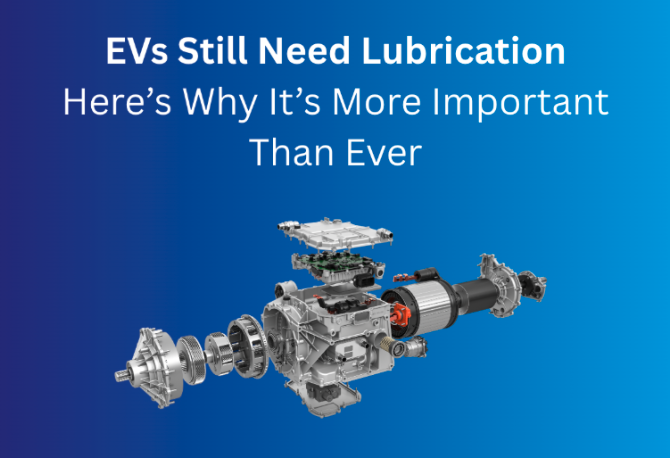
- Electric drive units (e-axles). These combine the motor, gearbox, and power electronics into one unit. The gears and bearings within still require lubricant to manage friction, wear, and heat.
- High-speed bearings. Electric motors operate at significantly higher speeds than traditional combustion engines – up to 18,000 rpm in some cases. At these speeds, bearing lubrication is critical, and the demands placed on greases and oils are considerably higher.
- Thermal management systems. Managing heat is one of the biggest engineering challenges in EV design. Specialised cooling fluids – often referred to as e-fluids – are used to cool batteries, power electronics, and motors. These fluids need to perform under high electrical voltages while also managing heat effectively.
- Chassis and auxiliary components. Wheel bearings, steering systems, suspension joints, and braking components all still require conventional lubrication just as they would on any vehicle.
The Unique Challenges of EV Lubrication
Lubricating electric drivetrains isn’t simply a case of using the same products you’d use elsewhere. The environment inside an EV drive unit is fundamentally different. Lubricants and fluids must be electrically compatible – meaning they need to provide the right level of electrical insulation (or in some cases, controlled conductivity) to avoid damaging sensitive electronics and copper windings. Traditional formulations weren’t designed with this in mind.
There’s also the challenge of foam. At very high speeds, air can become entrained in the lubricant, causing it to foam – which dramatically reduces its ability to protect surfaces. Low-viscosity formulations specifically designed for high-speed, high-voltage environments are increasingly in demand, and the market for these specialist e-fluids is growing at over 30% per year.
What This Means for Industrial Applications
The shift towards electrification isn’t just happening on the road – it’s happening on the factory floor too. Industrial robotics, automated guided vehicles (AGVs), electric forklifts, and servo-driven machinery are all becoming increasingly common in modern manufacturing and warehousing environments. The industrial robotics lubricants market alone is projected to grow by 11.3% annually through to 2030.
For maintenance and reliability teams, this means navigating a new and evolving landscape of lubricant requirements. The products that work brilliantly in your traditional plant may not be appropriate for your new electric-driven equipment – and getting this wrong can cause premature failures, voided warranties, and costly downtime.
Staying Ahead with the Right Partner
This is exactly the kind of challenge where having a knowledgeable lubrication partner makes all the difference. At Pure Lubrication, we work with leading manufacturers including LE and Mobil to ensure we’re stocking and recommending products that are fit for the modern industrial environment – including the growing range of e-fluids, high-speed greases, and thermally stable lubricants suited to electric motor applications.
Through our Pure Reliability service, we can help you audit your current lubricant usage, identify any gaps as your equipment evolves, and ensure your maintenance programme keeps pace with the technology you’re running. Because whether your motors run on petrol or electricity, the fundamentals of reliability haven’t changed: the right lubricant, in the right place, at the right time.
Curious About How This Affects Your Operation?
Whether you’re already working with electric-driven equipment or planning to make the transition, it’s never too early to think about your lubrication strategy.
Get in touch with the Pure Lubrication team and let’s have a conversation about what the shift to electrification means for you.
Contact the Pure Lubrication team today.